
How To Get More Local Customers in South Coast MA
by Jorge Melo
When potential customers in New Bedford or Fairhaven search for services "near me," your business needs to be the first result they see. Showing up in these searches requires three critical elements: a fully optimized Google Business Profile with consistent contact information across all directories, location-specific content on your website that speaks directly to South Coast Massachusetts communities, and a mobile-friendly site that converts searchers into customers. These high-intent searches represent people ready to hire someone right now, with 76% visiting a business within 24 hours of their search. If you're invisible in these results, you're handing customers directly to your competitors.
The truth is most local service businesses in our area are leaving money on the table.
They have great reputations, quality work, and satisfied customers, but when someone three miles away searches for their exact service, they don't appear. Meanwhile, competitors who understand local SEO are capturing these ready-to-buy customers simply by being visible at the right moment.
I've spent over 35 years helping businesses across the South Coast improve their online visibility, and I can tell you that "near me" searches have become one of the most valuable traffic sources for local service providers. The businesses that dominate these searches aren't necessarily the biggest or the oldest. They're the ones who've implemented smart local SEO strategies that signal to Google exactly where they are, what they do, and why they're the best choice for nearby customers.
What are "near me" searches?
"Near me" searches are location-based queries where customers add phrases like "near me," "nearby," or "open now near me" to find local businesses. When someone in Dartmouth searches "plumber near me" or a homeowner in Mattapoisett looks up "landscaper near me," they're not browsing casually. They have a problem that needs solving immediately.
These searches have exploded in popularity over the past decade. According to Google, "near me" queries increased 34 times since 2011, with "open now near me" searches seeing a 400% year-over-year increase. Roughly 46% of Google searches are local searches, and one of the biggest categories is "near me" searches.
Although data shows "near me" searches have declined slightly from their peak, keep in mind that Google has become more sophisticated with location tracking. The search engine now shows you results "near you" without requiring you to type "near me." This means optimizing for local search is more important than ever, even if the exact phrase appears less frequently.
Understanding mobile and local "near me" intent through statistics
Mobile devices drive the majority of "near me" searches. People on the go pull out their smartphones and search for immediate solutions. Mobile "near me" searches have seen 136% year-over-year growth, and mobile devices now account for 63% of all Google searches.
These searchers demonstrate high purchase intent. They're not researching options for next month. They need a service today. This immediacy creates tremendous opportunity for local businesses that can capture these searches effectively.
Why "near me" traffic converts better than generic queries
Someone searching "landscaping tips" is in research mode. Someone searching "landscaper near me" is ready to hire. That difference in intent is why "near me" traffic converts at an average rate of 80%, far higher than generic searches.
Think about the customer journey. A homeowner might start by researching "how to fix a leaking faucet," then progress to "best plumbers in Massachusetts," and finally search "emergency plumber near me" when they realize they need professional help. That final search represents maximum buying intent, and the businesses that appear in those results win the customer.
In our work with contractors and service providers across New Bedford and Fairhaven, we've seen this pattern repeatedly. The businesses investing in local SEO capture customers at this critical decision moment, while competitors relying only on word-of-mouth or traditional advertising miss these opportunities entirely.
How these queries surface in Google Search, Maps, and conversational AI
When someone searches for your service with local intent, Google displays results in several formats. Understanding these formats helps you optimize your presence across all of them.
The local 3-pack appears at the top of search results, showing three businesses with their location on a map. These businesses earn 126% more traffic and 93% more actions than those ranked below. Getting into this coveted space requires strong Google Business Profile optimization, consistent NAP information, and positive reviews.
Below the local pack, organic search results appear. Many of these are also local businesses, but they rank based on traditional SEO factors like content quality, backlinks, and on-page optimization. A strong local SEO strategy targets both the map pack and organic results.
Google Maps shows similar results when people search within the Maps app. Many users in South Coast Massachusetts search directly in Maps, especially when they're already mobile and need directions.
Conversational AI platforms like ChatGPT are beginning to surface local business results as well. When users ask these AI assistants for local recommendations, they often pull from business websites, directories like Yelp, and online reviews. Business websites make up 58% of results returned by ChatGPT for local queries.
How Google interprets "near me" intent
Google doesn't treat "near me" as just another keyword. Instead, the search engine interprets it as a proximity indicator. When someone searches "contractor near me," Google understands they want to see businesses closest to their current location.
Google determines your location through several signals. Your device's GPS and Wi-Fi provide the most accurate data. Your IP address, Google account information, and search history also contribute. Google states they use an area of at least 3 square kilometers or expand until the area represents at least 1,000 people to protect privacy.
This location awareness means you don't actually need to include "near me" in your search for Google to show local results. A simple search for "plumber" will typically return businesses near your current location. However, many users still add "near me" to their searches, which is why understanding this search behavior remains important for local businesses.
Google's three ranking factors for local search
Google uses three main criteria to determine which businesses appear in local search results. Understanding these factors is essential for any digital marketing strategy focused on local visibility.
Relevance measures how well your Google Business Profile matches a user's search terms. If someone searches "emergency HVAC repair" and your profile clearly indicates you offer emergency HVAC services, you score higher for relevance. Completing every section of your profile with detailed, accurate information improves this factor.
Distance considers how far your business is from the searcher's location. For "near me" searches where users don't specify a location, Google calculates distance based on what they know about your location. You can't change your physical distance from customers, but you can ensure Google clearly understands where you're located through consistent NAP information and local content.
Prominence refers to how well-known your business is both online and offline. Google considers review counts and scores, links from other websites, articles mentioning your business, and directory listings. In our experience across South Coast Massachusetts, businesses with strong local reputations offline can amplify that prominence online through strategic review generation and local link building.
The difference between implicit and explicit location-based queries
Some searches have implicit local intent. When someone searches "dentist" or "pizza," Google understands they're looking for local options and automatically returns nearby results. The search intent is clearly local even without location modifiers.
Other searches use explicit location language. Queries like "plumber in New Bedford," "landscaper Fairhaven MA," or "contractor near me" specifically signal local intent. These searches leave no doubt the user wants nearby businesses.
Both types matter for your local SEO strategy. Your Google Business Profile helps you appear for implicit searches, while location-specific content on your website helps you rank for explicit searches that include city names or "near me" language.
How conversational search impacts your local SEO strategy
Voice search and AI assistants have changed how people search for local services. Instead of typing "plumber New Bedford," someone might ask their phone "Who's the best plumber near me?" or tell Alexa to "Find an emergency electrician nearby."
These conversational queries tend to be longer and more natural sounding. They often include question words like "who," "what," "where," and "when." Your content should address these natural language queries by answering common questions your customers ask.
For example, rather than just targeting "landscaping services," you might create content answering "What landscaping services do I need in the spring?" or "Who offers affordable landscaping in Fairhaven?" This approach helps you appear not just in traditional search results but also in voice search and AI-powered recommendations.

How to show up in "near me" searches
Dominating local search results requires optimizing multiple elements of your online presence. Let's break down the specific tactics that help South Coast Massachusetts service businesses capture "near me" searches.
Google Business Profile optimization
Your Google Business Profile is the foundation of your local search visibility. This free tool from Google controls how your business appears in search results, Maps, and the local pack. For many potential customers, your profile provides their first impression of your business.
Start by claiming your profile if you haven't already. Search for your business name on Google and look for the option to claim or manage your listing. You'll need to verify your business, typically through a postcard Google mails to your physical address.
Once verified, complete every section of your profile. Add your business name, address, and phone number exactly as they appear on your website and other directories.
Choose the most accurate primary category for your business, then add relevant secondary categories. A landscaping company might select "Landscape designer" as primary and add "Lawn care service" and "Irrigation equipment supplier" as secondary categories.
Write a detailed business description that explains what you do and the areas you serve. Include services you offer and mention the communities you work in. For instance, "New England Tree & Landscape provides comprehensive landscape design and installation services to residential and commercial properties throughout New Bedford, Fairhaven, and the greater South Coast region."
Upload high-quality photos regularly. Include images of your storefront, your team, your work in progress, and completed projects. Businesses with photos receive significantly more clicks than those without. Show photos from different locations you serve to reinforce your local presence.
Update your business hours and keep them current. Nothing frustrates potential customers more than showing up to a closed business or calling during hours listed as open. Update your hours for holidays, special events, or seasonal changes.
Enable and use Google Posts to share updates, offers, and events. These posts appear on your profile and help keep your listing active and engaging. Share completed projects, seasonal promotions, or helpful tips related to your services.
The Q&A section lets you answer common questions customers have. Monitor this section and provide thoughtful, detailed answers. You can also add your own questions and answers to address topics you know customers wonder about.
If you offer specific products or services, add them to your profile. A plumber might list "Water heater installation," "Drain cleaning," "Leak repair," and other specific services. This detail helps you match more specific search queries.
Encourage your customers to leave reviews on Google
Reviews significantly impact your local search rankings and influence customer decisions. Google is the most important platform for reviews, with 73% of consumers using it to evaluate local businesses. In fact, 64% of consumers say they're likely to check Google reviews before visiting a business.
Most customers will happily leave a review if you ask them. The key is making it easy and asking at the right moment, right after you've completed excellent work and the customer is satisfied.
Create a simple process for requesting reviews. You can send a follow-up email or text message with a direct link to your Google review page. Google provides a short URL you can share that takes customers directly to the review form for your business.
Don't just collect reviews and ignore them. Responding to reviews, both positive and negative, demonstrates that you value customer feedback and builds trust with potential customers reading those reviews. Your responses also provide context and show the human side of your business.
For negative reviews, respond professionally and offer to make things right. Many potential customers look specifically at negative reviews and how businesses respond to them. A thoughtful response to criticism can actually build more trust than having no negative reviews at all.
Consistent name, address, and phone number across all platforms
NAP consistency might sound simple, but it's one of the most common mistakes local businesses make. Your business name, address, and phone number must appear identically everywhere they're listed online.
Google looks for consistency across the web when determining a business's credibility. If your address appears as "123 Main Street" on your website but "123 Main St." on Yelp and "123 Main Street, Suite B" on another directory, it introduces uncertainty. These inconsistencies can hurt your local rankings.
Standardize how you present your information. Decide on one format and use it everywhere. Include suite numbers consistently. Use the same phone number across all listings. Don't abbreviate on some platforms and spell out on others.
Audit your current listings to find inconsistencies. Search for your business name on Google and check where you're listed. Common places to verify include your website, Google Business Profile, Facebook, Yelp, Better Business Bureau, industry-specific directories, and local chamber of commerce websites.
For businesses serving South Coast Massachusetts, make sure your address clearly indicates your location. If you're based in Fairhaven, having that city name appear consistently across all platforms reinforces your local presence to Google and potential customers.
Local landing pages for each location
If you serve multiple communities across the South Coast, create dedicated landing pages for each location. These pages signal to Google that you're relevant for searches in those specific areas and give you more opportunities to rank for location-specific queries.
Each location page should include unique content that speaks to that specific community. Don't just duplicate the same content and swap out city names. This approach looks spammy to Google and provides no value to visitors.
Include your complete address, phone number, and hours for that location. Add an embedded Google Map showing your location and write driving directions from major roads or landmarks that locals would recognize.
Use city and neighborhood names in your headings, title tags, and throughout your content. If you're creating a page for your Mattapoisett services, include "Mattapoisett" and nearby areas like "Marion" or "Rochester" in your content naturally.
Add photos specific to projects you've completed in that area. Testimonials from customers in that community also build local relevance and trust.
Write about local conditions or considerations that apply to that area. For instance, a landscaping company might mention, "Properties near the Fairhaven coastline face unique challenges from salt spray and sandy soil, which is why we recommend salt-tolerant plant varieties and soil amendments that improve drainage and nutrient retention."
Link these location pages to related service pages and blog content using natural anchor text. This internal linking strengthens your overall site structure and helps Google understand the relationship between your pages.
Include location-based keywords naturally
Keyword research helps you understand how potential customers in your area search for your services. Look for long-tail, location-specific terms that indicate buying intent.
Someone searching "landscaping" is probably in research mode. Someone searching "landscaping services in New Bedford MA" or "affordable landscaper Fairhaven" is much closer to hiring someone. These longer, more specific queries often have less competition and higher conversion rates.
Use location-based keywords in your title tags, meta descriptions, headers, and content. However, never force keywords into places where they don't fit naturally. Build useful sentences first, then see where keywords fit organically.
For example, instead of writing "We offer plumbing services in New Bedford. Our New Bedford plumbing services are the best New Bedford plumbing," write something helpful like "The older homes we maintain through our plumbing services in New Bedford often have galvanized pipes that need replacement, which is why we recommend proactive inspection for properties built before 1960."
Include landmarks and neighborhoods in your content
Beyond city names, including recognizable landmarks and neighborhood names helps Google understand your location and resonates with local visitors. These proper nouns provide additional location signals.
If you're based in Fairhaven, you might mention being "near Fort Phoenix" or "just off Route 6." A New Bedford business might reference being "downtown near the Whaling Museum" or "in the north end near Brooklawn Park."
These references serve multiple purposes. They help with SEO by providing more location context. They help visitors understand exactly where you are. And they demonstrate local knowledge that builds trust with community members.
We use this strategy on our own website, mentioning specific South Coast neighborhoods and landmarks to show we understand and serve the local area. This authentic local presence makes a difference in how both search engines and potential customers perceive your business.
Optimize for voice search and AI-powered local search
Voice search has changed how people look for local businesses. Instead of typing short keywords, people speak in full sentences and questions. They ask their phones "Where can I find an emergency plumber near me?" or tell Siri to "Show me the highest-rated landscapers in Fairhaven."
Optimize for these conversational queries by creating content that answers common questions your customers ask. Think about the questions you hear repeatedly and create content addressing them. Use natural language and question formats in your headers.
For instance, rather than a heading like "Lawn Care Services," you might use "What lawn care services do South Coast Massachusetts homeowners need?" This question format matches how people speak and search.
AI-powered search results from tools like ChatGPT and Google's AI Overviews are starting to impact local search as well. These AI systems often pull from high-quality content that demonstrates expertise and provides comprehensive answers. Creating detailed, authoritative content positions you to appear in these AI-generated results.
A pizza restaurant might write about its "award-winning wood-fired pizza" using locally targeted language that appeals to both traditional search engines and AI assistants. Include various content formats like images, videos, and interactive elements that AI systems can process and reference.
Optimize on-page SEO elements
Once you've optimized your Google Business Profile and created location-specific content, fine-tune the technical SEO elements that help Google understand and rank your pages.
Optimize title tags with local keywords
Title tags are the clickable headlines that appear in search results. They're one of the most important on-page SEO elements for ranking. Each page on your site should have a unique title tag that includes relevant keywords and location information.
For a service page, your title might be "Professional Landscape Design Services in Fairhaven, MA | New England Tree & Landscape." This format includes your service, location, and company name.
Keep title tags under 60 characters so they don't get cut off in search results. Put your most important keywords toward the beginning of the title.
Write compelling meta descriptions
Meta descriptions don't directly impact rankings, but they influence whether people click your result. These short summaries appear below your title in search results and should encourage users to visit your page.
Include your location and a clear value proposition. A landscaping company might write, "Transform your New Bedford property with professional landscape design and installation. 35+ years serving South Coast Massachusetts. Free consultations available."
Keep meta descriptions under 160 characters. Think of them as a short advertisement for your page that competes against other results on the same page.
Use keywords in header tags strategically
Header tags (H1, H2, H3, etc.) organize your content and signal to Google what each section is about. Your H1 should include your main keyword and location. Subleaders can incorporate variations and related terms.
For instance, a page about your services might have an H1 like "Comprehensive landscape services for South Coast Massachusetts properties." H2 headers might include "Landscape design and installation in New Bedford," "Custom hardscaping for Fairhaven homes," and "Seasonal maintenance programs across the South Coast."
Use headers to break up your content and make it scannable. People often skim pages looking for specific information, and clear headers help them find what they need.
Follow EEAT guidelines for content quality
EEAT stands for Experience, Expertise, Authoritativeness, and Trustworthiness. These factors signal to Google that your content is high-quality and deserves to rank well.
Demonstrate experience by sharing real examples from your work. If you're writing about drainage solutions, mention specific projects you've completed and the results you achieved.
Show expertise through detailed, accurate information that goes beyond surface-level tips. Explain not just what to do but why it works and when it's the right solution.
Build authority by earning links from other reputable sites, getting mentioned in local media, and accumulating positive reviews. These third-party endorsements tell Google that others value your knowledge and services.
Establish trust through transparency. Include clear contact information, showcase your credentials, respond to reviews professionally, and create content that genuinely helps readers rather than just trying to sell.
Build internal links between related pages
Internal linking connects pages on your website and helps Google understand your site structure. It also keeps visitors engaged by directing them to related information they might find helpful.
Link from high-performing pages to newer or less-visited pages to pass some of that authority. Use descriptive anchor text that tells readers what they'll find on the linked page.
For example, you might write, "Many South Coast homeowners struggle with poor drainage after heavy rainfall, which is why our drainage solutions and grading services in New Bedford focus on comprehensive site assessment before recommending solutions."
This approach provides value to readers while naturally linking to related service pages. Avoid generic anchor text like "click here" or "learn more." Instead, use descriptive phrases that include relevant keywords.
Use geocoded images and optimize alt text
Images provide another opportunity to signal your location to Google. Geocoding images associates them with specific geographic coordinates, reinforcing where you operate.
You can geocode images by taking photos with a GPS-enabled camera or smartphone, which stores location data in the image metadata. Alternatively, upload images to photo-sharing sites like Flickr and add location information manually.
Every image on your site should include alt text that describes the image content. Alt text helps visually impaired users understand images through screen readers and provides another place to naturally include location information.
Rather than generic alt text like "landscape project," write something descriptive like "Custom patio installation with stone walkway for residential property in Fairhaven, Massachusetts." This approach improves accessibility while reinforcing local relevance.
Implement schema markup for local businesses
Schema markup is structured data that helps search engines understand your content more clearly. LocalBusiness schema tells Google specific details about your business like your address, phone number, hours, services, and more.
Google offers several schema types for local businesses. At minimum, implement the basic LocalBusiness markup with your NAP information, business type, logo, and geographic coverage area.
You can also use more specific markup like Service schema to detail the services you offer or Review schema to showcase customer testimonials. This structured data helps Google display rich results like star ratings in search results.
If you're not technical, many website platforms and plugins can help you implement schema markup without coding. The investment is worth it for the improved visibility and rich search results it can provide.
Make your website mobile-friendly and fast
Mobile devices generate 63% of Google searches, and Google uses mobile-first indexing, meaning they primarily use the mobile version of your site for ranking purposes. If your site doesn't work well on mobile, you're invisible to the majority of potential customers searching for your services.
Responsive design ensures your site adapts to different screen sizes. Text should be readable without zooming. Buttons and links should be easy to tap with a thumb. Navigation should be simple and intuitive.
Page speed matters tremendously on mobile, where users might have slower connections. Compress images, minimize code, and use efficient hosting to ensure fast load times. Google's PageSpeed Insights tool can identify specific issues slowing down your site.
Eliminate anything that creates friction on mobile. Pop-ups that cover the whole screen, forms with tiny text fields, or navigation menus that don't work on mobile all drive potential customers away.
Streamline navigation for multi-location businesses
Site navigation helps visitors find what they need quickly. For businesses serving multiple South Coast communities, clear navigation is especially important.
Create a locations page that lists all areas you serve, then link to individual location pages for each community. This structure helps visitors quickly find information relevant to their area without searching through your entire site.
Include location information in your main navigation or footer so it's accessible from every page. This visibility signals to both visitors and search engines that you serve specific geographic areas.
Include driving directions on location pages
While most people use GPS for directions, including written directions on your location pages provides additional context for search engines and visitors. It's another signal of your physical location.
Write directions from several starting points or major roads. For a Fairhaven business, you might include directions from Route 6, from I-195, and from New Bedford. Use local landmarks people recognize to make directions more helpful.
Pair written directions with an embedded Google Map that visitors can interact with. This combination serves different user preferences and provides multiple location signals for search engines.
Create hyper-local content that resonates with communities
Generic content doesn't build trust or rank well for local searches. Create content that demonstrates deep understanding of the communities you serve. Show you're not just a business serving the area but part of the community.
Write about local events you sponsor or participate in. Discuss specific challenges properties in different South Coast neighborhoods face. Share stories from projects you've completed that include local context.
For example, a landscaping company might write, "Properties along Sconticut Neck in Fairhaven face unique exposure to salt spray from Buzzards Bay, requiring careful plant selection and regular maintenance to combat salt damage. In our 35 years maintaining coastal properties, we've found that using salt-tolerant native species like beach rose and seaside goldenrod creates landscapes that thrive despite harsh coastal conditions."
This approach provides genuine value to readers while naturally incorporating location information and demonstrating local expertise.
Leverage user-generated content from customers
Your customers create valuable content through reviews, testimonials, photos, and social media posts. This user-generated content provides social proof and fresh material you can repurpose.
Encourage customers to share photos of completed projects on social media and tag your business. With permission, feature these photos on your website or social media profiles, optimizing them with local keywords in captions and alt text.
Request detailed testimonials that include location information. Instead of just "Great service!" ask satisfied customers to describe their specific experience, including where they're located and what you did for them.
Consider using tools to embed Google reviews directly on your website. This automation keeps fresh reviews visible to site visitors while reinforcing the positive feedback you've earned.
Incorporate off-page SEO strategies
Local SEO extends beyond your website and Google Business Profile. Off-page factors like backlinks, citations, and local partnerships significantly impact your visibility in "near me" searches.
List and promote local events you participate in
Sponsoring or participating in local events builds community connections while providing SEO benefits. When you sponsor an event, you typically get mentioned on the event website, creating a local backlink to your site.
Add these events to your own website as well. Create event pages or blog posts about events you're involved with. Use Event schema markup to provide structured data about the event details, including location information.
For instance, if you sponsor a charity event in New Bedford, create a page describing your involvement, why you support the cause, and event details. This content provides fresh material for your site while reinforcing your local presence and community engagement.
Build a strong backlink profile with local focus
Backlinks from other websites act as votes of confidence that tell Google your site is credible and authoritative. For local SEO, focus on earning links from local sources that reinforce your geographic relevance.
Local media outlets, community resource websites, chamber of commerce directories, and industry-specific local directories all provide valuable local backlinks. These links carry more weight for local search rankings than generic national links.
Look for opportunities to contribute guest posts to local blogs or publications. Offer expert commentary to local journalists writing stories related to your industry. Sponsor local organizations that list sponsors on their websites with links.
When building backlinks, focus on quality over quantity. One link from a highly respected local news site carries more value than dozens of low-quality directory listings. Google evaluates the authority and relevance of sites linking to you, not just the number of links.
Create valuable content that others naturally want to link to. Comprehensive guides, original research, infographics, and helpful resources all attract organic backlinks over time.
Include your NAP everywhere consistently
We've mentioned NAP consistency several times because it's that important. Your name, address, and phone number should appear identically across your website, Google Business Profile, social media profiles, and every directory listing.
Create a standard format and stick to it everywhere. If your address includes Suite B, include it on every listing. Use the same phone number format. Don't abbreviate your business name on some platforms and spell it out on others.
Common places to list your NAP include your website footer, contact page, about page, location pages, and often your homepage. Off-site, ensure consistency on Google Business Profile, Facebook, Yelp, Better Business Bureau, Apple Maps, Bing Places, industry directories, and local business directories.
Use Localbusiness schema markup on your website to provide structured NAP data that search engines can easily read and verify. This markup reinforces the information Google sees across other sources.
Tracking and measuring local SEO performance
You can't improve what you don't measure. Tracking your local SEO performance helps you understand what's working and where to focus your efforts.
Google Business Profile Insights provides data about how people find and interact with your profile. You can see how many people viewed your profile, clicked to your website, requested directions, or called your phone number. Track these metrics monthly to identify trends.
Google Search Console shows which search queries drive traffic to your website and how you rank for different terms. Filter by queries including your location to see your performance for local searches. Monitor your average position, clicks, and click-through rate for important local keywords.
Google Analytics reveals where your website traffic comes from and what visitors do on your site. Set up goals to track conversions like form submissions, phone calls, or quote requests. Compare traffic from different sources to understand which marketing channels drive the most valuable visitors.
Track your rankings for important local keywords using tools like SEMrush or other rank tracking software. Monitor your position for terms like "landscaping services New Bedford" or "contractor Fairhaven MA" to see how your visibility changes over time.
Review count and average rating on Google and other platforms are important metrics to track. Set a goal for earning a certain number of new reviews each month and monitor your average rating to ensure it stays high.
Conversion rate tells you what percentage of website visitors take desired actions. A high conversion rate means your site effectively turns visitors into customers. A low conversion rate suggests issues with your website, messaging, or offer that need improvement.
Common mistakes to avoid with local SEO "near me" optimization
Many South Coast businesses make preventable mistakes that hurt their local search visibility. Avoiding these errors gives you an advantage over competitors who haven't figured out what works.
Keyword stuffing and unnatural content
One of the biggest mistakes is cramming keywords into content in ways that sound robotic and unnatural. This approach, called keyword stuffing, actually hurts your rankings while making your content unreadable.
Google's algorithms have become sophisticated at detecting and penalizing keyword stuffing. More importantly, when potential customers read content that's obviously written for search engines rather than humans, they leave your site and hire someone else.
Instead, write naturally and helpfully first. Include keywords where they fit organically, but prioritize clarity and value over keyword density. If a sentence sounds awkward when you read it aloud, rewrite it.
Inconsistent NAP information
We've emphasized NAP consistency throughout this article because it's one of the most common yet impactful mistakes local businesses make. Even small inconsistencies confuse search engines and hurt your rankings.
Many businesses update their phone number or address in one place but forget to update it everywhere. Others format their information differently across various platforms. These discrepancies tell Google that the data might not be reliable.
Set aside time to audit all your listings and correct any inconsistencies. Use a spreadsheet to track everywhere you're listed and ensure all information matches exactly. When you make changes, update every listing systematically.
Ignoring mobile users and page speed
With the majority of "near me" searches happening on mobile devices, a website that doesn't work well on mobile is essentially invisible to your target audience. Slow load times compound the problem, causing impatient mobile users to leave before your page even loads.
Test your website on various mobile devices to ensure everything displays and functions correctly. Use Google's Mobile-Friendly Test tool to identify specific issues. Invest in improving page speed through image optimization, efficient code, and quality hosting.
Remember that mobile users often have different needs than desktop users. They want quick access to your phone number, address, and directions. Make sure these elements are prominent and easy to use on mobile screens.
Neglecting Google Business Profile optimization
Some businesses create a Google Business Profile but never fully optimize or maintain it. They leave sections incomplete, never post updates, ignore reviews, or let their information become outdated. This neglect wastes one of the most powerful free tools available for local search visibility.
Treat your Google Business Profile as your digital storefront. Keep it complete, current, and engaging. Regular updates, fresh photos, and active review management signal to Google that your business is active and deserves visibility.
Frequently asked questions about dominating "near me" searches
Why do "near me" searches matter for my business?
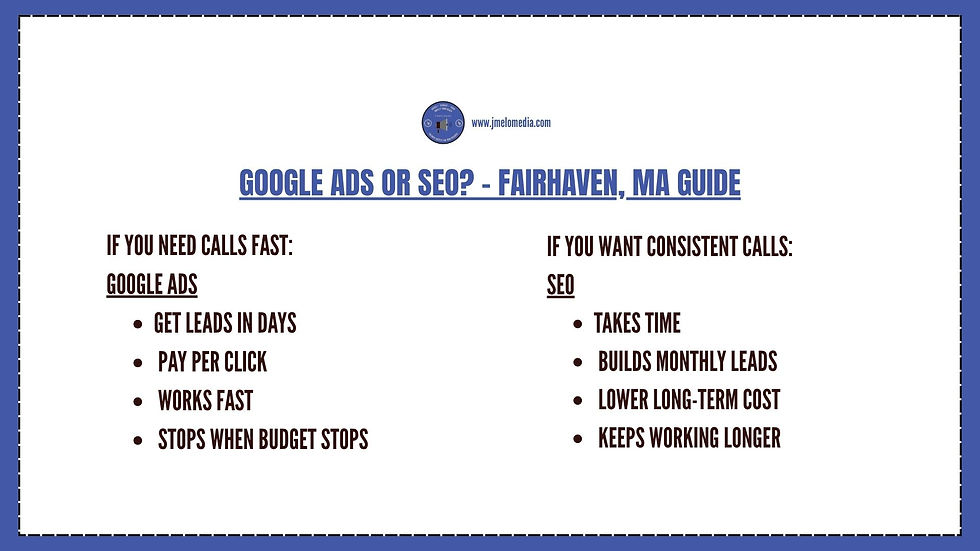
These searches represent customers ready to buy right now, converting at an 80% average rate. When we optimized New England Tree & Landscape's Google Business Profile, they jumped from barely visible to the top 3 results in under a week. Within days, they noticed a huge spike in calls from Google. This isn't like Google Ads where you pay per click forever. Once optimized, this system generates leads on autopilot, bringing customers long after the initial work is done.
Does content really matter for search engine ranking?
Absolutely. Content gives Google more signals about what services you provide, where you provide them, and how knowledgeable you are about your industry. When we created location-specific content for New England Tree & Landscape, their website reached the first page of Google for all the areas they serve and most of their services. They started getting frequent emails, calls, and form submissions. Generic content won't cut it. You need content that demonstrates real expertise and speaks to your local communities.
How much do backlinks really matter in AI search?
Backlinks remain critical because they're third-party validation of your credibility. For local businesses, links from South Coast news sites, chambers of commerce, and community organizations tell search engines you're established and trustworthy. As AI tools like ChatGPT start recommending local businesses, they pull from sites with strong backlink profiles. Building relationships through local partnerships, sponsorships, and community involvement creates natural backlink opportunities that boost visibility across traditional and AI-powered search.
Why won't my local business show up in searches?
Your Google Business Profile likely isn't complete, your website isn't aligned with your GBP, or you lack sufficient content. Most businesses we work with have inconsistent contact information across directories, incomplete profiles, and websites with little location-specific content. Start by fully completing your GBP with photos, services, and accurate hours. Then ensure your NAP information matches everywhere online. If you've done these basics and still aren't visible, technical SEO issues might need professional help.
How to find the most popular pages on a website?
In Google Analytics, go to Behavior, then Site Content, then All Pages. This shows which pages get the most traffic. Look beyond just pageviews though. Check time on page, bounce rate, and conversion rate to see if visitors actually find value or leave disappointed. Your homepage, key service pages, and location pages should typically perform best. If pages get traffic but don't convert, they need better calls-to-action or content improvements.
How do I get more customers to my website?
Set up a local SEO system that brings customers on autopilot once optimized. This includes optimizing your Google Business Profile, creating location-specific content, and building local backlinks. Unlike Google Ads or lead-buying services where you pay forever, local SEO is your own system. New England Tree & Landscape now ranks first page for their services across the South Coast and gets frequent leads through their website. Combine this with social media, email marketing to past customers, and you create multiple pathways for customers to find you.
How to do local listing in SEO?
Local listings are references to your business name, address, and phone number on directories. Start with Google Business Profile, Apple Maps, Bing Places, Facebook, and Yelp. Then add industry-specific directories. The critical part is consistency. Use the exact same NAP format everywhere, matching what's on your website. Fill out every field completely. When we audit local businesses, inconsistent listings are one of the most common issues hurting their visibility.
How to get my site to the top of Google?
Ranking requires technical SEO, quality content, and authority building. Ensure your site is fast and mobile-friendly. Create comprehensive content that answers customer questions and includes location information naturally. Build backlinks from reputable local sources. For local businesses, optimize your Google Business Profile and maintain consistent NAP everywhere. Understand that SEO takes 3-6 months for significant results. When we work with clients, we focus on getting real results in a reasonable timeframe, not dragging out retainers to maximize our profit.
How do I get more customers in New Bedford?
Create a dedicated New Bedford location page addressing specific needs of New Bedford properties. Include references to New Bedford neighborhoods and landmarks. Optimize your Google Business Profile for New Bedford as a service area. Participate in New Bedford community events and join the Chamber of Commerce for local connections and backlinks. Encourage New Bedford customers to leave reviews mentioning their location. The key is establishing yourself as a trusted local resource specifically for New Bedford residents, not just a regional business serving the area.
How can I bring in more customers for my small hair business?
Local SEO is crucial for hair salons and barbers. People searching "hair salon near me" or "barber near me" are checking Google Maps for places with good reviews, quality photos, and accurate information. Especially for people new to the area without personal recommendations, they rely entirely on Google Maps, Apple Maps, Bing, and Yahoo to find you. You need to be on all these platforms with complete profiles. Upload before-and-after photos, encourage every satisfied client to review you on Google, and stay active on Instagram and Facebook showcasing your work.
What makes J Melo Media different from other marketing agencies?
We don't focus on dragging out SEO retainers to maximize profit. We focus on getting you real results in a reasonable timeframe. With over 35 years of business experience through New England Tree & Landscape, I understand the challenges local service businesses face because I've lived them. We specialize in local SEO for contractors, plumbers, and landscapers who need to dominate "near me" searches. When New England Tree & Landscape hired us, we got them ranking first page across the South Coast. Then we optimized their Google Business Profile and nearly doubled their map rankings in under a week, generating a huge spike in calls. That's the system we build for our clients.
Take control of your local search visibility today
Every day your business doesn't appear in "near me" searches, you're handing potential customers to competitors who've invested in local SEO. These aren't casual browsers. They're ready-to-buy customers actively searching for the services you provide, often within just a few miles of your location.
The businesses dominating local search results in New Bedford, Fairhaven, and across South Coast Massachusetts aren't necessarily bigger or better than yours. They've simply implemented the strategies outlined in this guide: optimized Google Business Profiles, consistent NAP information, location-specific content, mobile-friendly websites, and strong local backlinks.
You don't need a massive marketing budget to compete. You need a strategic approach to local SEO that consistently signals to Google where you are, what you do, and why you're the best choice for nearby customers. Start with the fundamentals. Claim and complete your Google Business Profile. Audit your listings for consistency. Create your first location-specific content page. These steps cost nothing but time and immediately begin improving your visibility.
For South Coast service businesses ready to dominate local search and capture more "near me" customers, J Melo Media provides the expertise and local knowledge you need. We've helped businesses across New Bedford, Fairhaven, and surrounding communities improve their online visibility and generate consistent customer inquiries through strategic local SEO.
Contact J Melo Media today at (508) 972 1223, email us at jorge@jmelomedia.com, or visit https://www.jmelomedia.com/marketingservices to learn how we can help your business show up when nearby customers search for your services.
Let's turn those "near me" searches into new customers for your business.
Sources
Ellis, Miriam. "'Near me' SEO: Optimize for local searches that convert." Search Engine Land, 22 July 2025, https://searchengineland.com/guide/near-me-search-optimization.
Roth, Alex. "How to Optimize Your Local SEO to Rank for 'Near Me' Searches." SOCi, 14 October 2025, https://www.soci.ai/blog/seo-near-me/.
Dunganan, Thea. "How To Turn 'Near Me' Searches Into Local Leads." Thrive Internet Marketing Agency, 19 August 2025, https://thriveagency.com/news/how-to-turn-near-me-searches-into-local-leads/.
Salem, Amanda. "How to Use Google 'Near Me' Searches to Your Advantage." Constant Contact, https://www.constantcontact.com/blog/google-near-me-searches/.
Solomon, Eric. "How to Rank for 'Near Me' Keywords With Local SEO." Ignite Visibility, 9 September 2025, https://ignitevisibility.com/rank-near-local-search-seo/.


Comments